


You Don't Have to Be Falling Apart to Need Therapy

I think there is still this misconception that counselling is something you only do when everything has gone completely wrong.
When you're having a breakdown.
When you can't get out of bed.
When you've experienced something traumatic.
When you've reached the point where you think, "I can't do this anymore."
And yes, counselling absolutely has an important place when life feels unbearable. But here's something I really want people to know: You don't have to be completely falling apart to benefit from therapy. You don't even need to know exactly what's wrong.
Sometimes, you're functioning.
You're going to work.
You're looking after the kids.
You're answering messages.
You're getting tea on the table.
You're showing up for everyone else.
And yet, somewhere underneath all of that, you're thinking:
"I'm exhausted."
"I don't feel like myself anymore."
"I don't know how much longer I can keep doing everything."
"Why am I feeling like this when my life looks fine?"
That is enough.
You can be coping and still not be okay
One of the things I hear a lot is: "But I'm coping." And maybe you are. But coping and being okay aren't necessarily the same thing. We can become incredibly good at functioning while we're struggling. We keep busy. We push things down. We tell ourselves other people have it worse. We carry on because there isn't really another option. And sometimes we don't even realise how much we're carrying until we finally stop. Remember - You don't need to be falling apart to need therapy.
That doesn't mean there's something wrong with you. It might simply mean you've been carrying too much for too long. The NHS recognises that long-term or severe stress can leave us feeling physically, mentally and emotionally exhausted, with symptoms such as racing thoughts, feeling overwhelmed, irritability and even physical symptoms. (nhs.uk)
"But I don't have a serious problem"
This is another reason people hesitate to seek counselling.
"I haven't been diagnosed with anything."
"I'm not depressed."
"My life isn't that bad."
"Other people need therapy more than I do."
Counselling isn't a competition. You don't have to prove that you're struggling enough to deserve support.
In fact, current UK research suggests attitudes towards therapy are changing. BACP's 2026 Public Perceptions Survey found that 53% of people disagreed that seeking counselling without a serious problem is self-indulgent, while 85% said it is better to talk to a therapist before things get out of hand.
I think that's an important shift. Because why wait until you're completely overwhelmed before you give yourself permission to ask for help?
Maybe you just need somewhere to put it all
Sometimes there isn't one huge thing. It's the accumulation of everything.
Work.
Relationships.
Family.
Parenting.
Money.
Expectations.
Change.
Loss.
Worry.
Trying to keep everybody else happy, why do we all think we need to do that, I'm no stranger to this one.
Trying to work out who you are while also being the person everyone else needs you to be. We can forget who we really are beneath being needed.
Sometimes you simply need a space where:
You don't have to be the strong one.
You don't have to make someone else feel better.
You don't have to minimise what you're experiencing.
You don't have to say, "I'm fine."
You can just be honest.
Counselling isn't about fixing you
This is something I really believe at my core. You're not a broken toaster who needs a new plug. Counselling can be a space to slow things down and understand what's happening underneath the surface. Sometimes that means exploring where your anxiety comes from. Sometimes it's understanding patterns in relationships. Sometimes it's rebuilding confidence. Sometimes it's processing something that happened years ago.
And sometimes it's simply having someone sit with you while you work out what you actually want. This is always a hard one, and something people have rarely thought about before.
There isn't one reason to come to counselling. And there isn't one type of person who needs it.
What if you waited until things got worse?
Imagine you had a swollen knee that was becoming increasingly difficult to manage. Would you wait until you couldn't walk before asking for help? Probably not. Yet when it comes to our emotional wellbeing, many of us do exactly that. We wait. We minimise. We tell ourselves we'll deal with it later. And then later becomes months or years.
Getting support earlier doesn't mean you're weak. It can actually mean you're recognising that something matters before it becomes overwhelming. That's a real strength, and something to be proud of.
So, do you need therapy?
Maybe. Maybe not. And that's something we can explore together.
You don't need to arrive with a diagnosis.
You don't need a perfectly formed explanation.
You don't even need to know what you want to talk about.
You can simply arrive with:
"I don't really know what's wrong. I just know I don't feel like myself."
And that's a perfectly good place to start. Because sometimes counselling isn't about fixing what's broken. Sometimes it's about finally having somewhere safe to put everything you've been carrying. Dumping everything out of your metaphorical handbag so your shoulders can feel some relief.
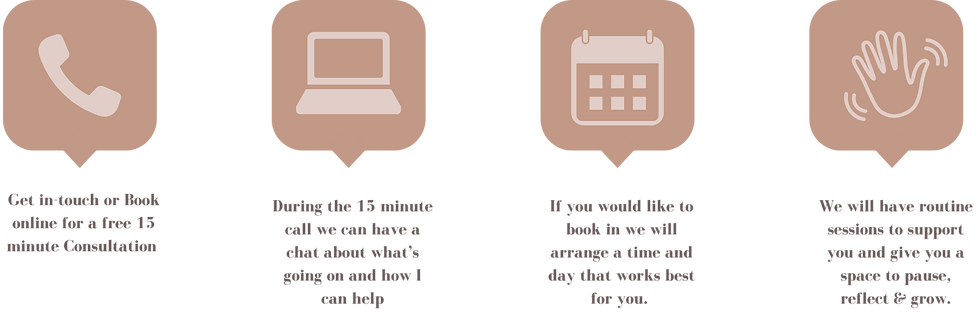
If you've been wondering whether counselling could be right for you, you can arrange a confidential consultation with me to talk things through without any pressure or obligation.
Remember - You Don't Have to Be Falling Apart to Need Therapy
How to get Started

Comments